

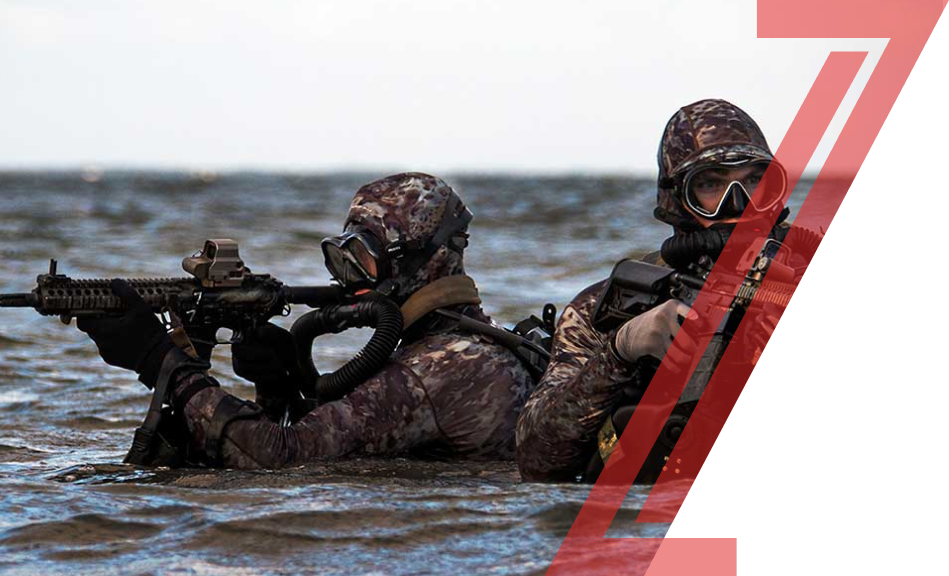
NAVY SEALs
NAVY SEALs
You’ve spent your career in an environment where performance matters, tempo never slows, and personal health comes second to the mission. Training cycles, deployments, and constant readiness make it easy to ignore injuries and nearly impossible to keep medical documentation squared away. Zero Nexxus is for SEALs who want a structured transition plan that accounts for the demands, hazards, and long-term impact of life on the Teams.
SEAL-Specific
Operational Hazards

Blast and
overpressure exposure
breaching, shoulder-fired weapons, heavy explosives, and repeated overpressure in urban training environments.

Heavy kit under speed
cervical and lumbar damage from movement in full kit during DA, maritime ops, and mobility work.

Close-quarters and combatives
chronic shoulder, elbow, wrist, and hand injuries.

Diving operations
barotrauma, sinus/ear issues, cold-water neuropathy, oxygen toxicity exposure, finning injuries.

Maritime shock loading
spine and neck trauma from high-speed boats and rough seas.

Static shooting and
optic use
migraines, neck tension, visual strain.

Jump operations
ankle, knee, and spinal compression injuries.
The Problem

Chronic
Allostatic Overload
Years of high-threat missions, irregular sleep, and nonstop stress drive the physiological load associated with operator syndrome — sleep disruption, irritability, endocrine shifts, chronic fatigue, and cognitive slowdown.


The Solution
We build a structured transition plan centered on how SOF injuries present — and how they need to be documented for the VA to evaluate them correctly.

YOU ONLY TRANSITION ONCE.
Most service members have never purchased a service like this — but they should.
“Most service members don’t realize how much money, time, and opportunity they lose during transition
until it’s already too late. We fix that.”