

SOIDC & 18D
SOIDC & 18D
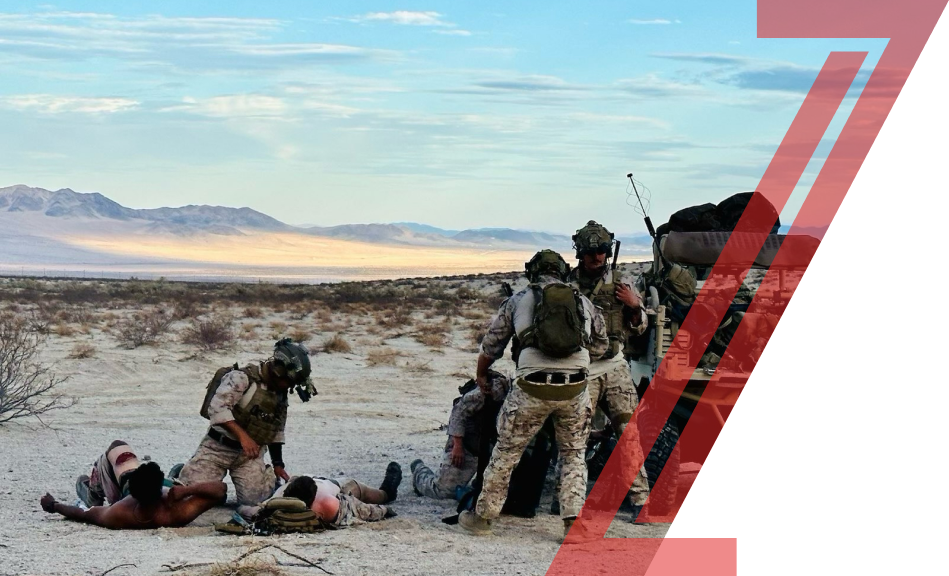
As an 18D or SOIDC, you operate in high-risk, medically austere environments where deployments and training cycles leave little time for personal care or documentation. When deployments end, you often move straight into another cycle without time to plan your transition. This is for 18Ds and SOIDCs who need a structured transition plan that accounts for the pace, hazards, documentation gaps, and long-term physiological cost of the career.
Medic-Specific
Operational Hazards

Blast and
overpressure exposure
Breaching, small arms & crew-served weapon systems, repeated sub-concussive events. Often undocumented. Rarely tracked longitudinally.

Heavy kit under
dynamic movement
Cervical and lumbar degeneration from years of plates, med bags, comms, and team gear during operations.

Casualty carry and
prolonged field care
Casualty lifts, awkward extractions, repetitive strain under stress.

Close-quarters
and range work
Shoulder, elbow, hand injuries from CQB, weapons manipulation, combatives, and training repetitions.

Airborne / MFF / Maritime operations
Spinal compression, joint instability, barotrauma, sinus and ear issues.

Combatant Diving / Chamber Operations
Ear, sinus, lung concerns and sub-clinical neuro symptoms not formally evaluated.

Austere environments
Irregular sleep, limited recovery cycles, inconsistent access to specialty care.
The Problem

Chronic
Allostatic load
Years of sustained operational tempo creates more than orthopedic wear.

Add operational constraints:
Limited or inconsistent access to MHS GENESIS
Overseas or remote care that never integrates into your permanent record
Paper notes that never follow you
Training schedules that override follow-up appointments The result?

YOU ONLY TRANSITION ONCE.
Most service members have never purchased a service like this — but they should.
“Most service members don’t realize how much money, time, and opportunity they lose during transition
until it’s already too late. We fix that.”