

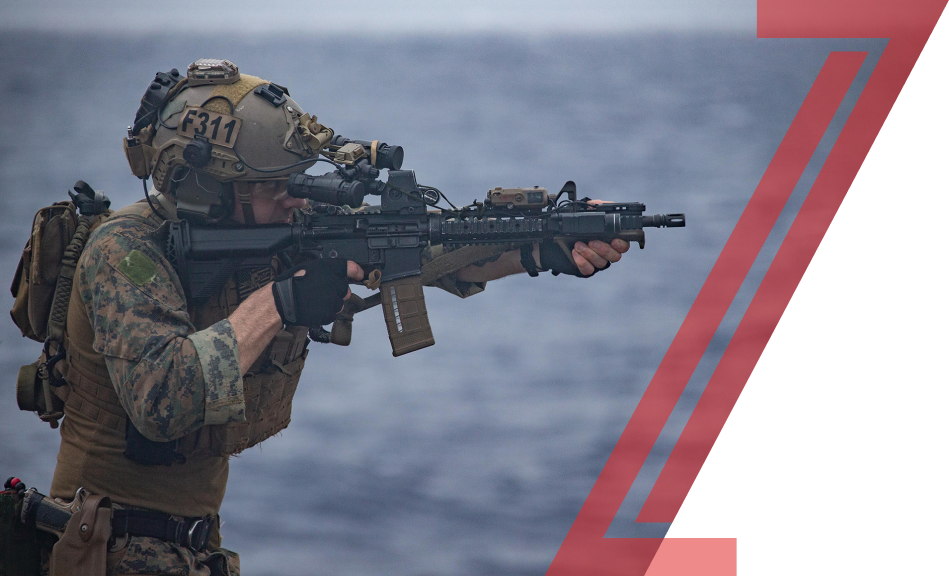
MARINE RECON
MARINE RECON
Recon Marines operate in environments where physical demand, tempo, and mission requirements often override personal health. Going to medical is never the priority as a result injuries accumulate, and career timelines rarely line up with the transition process. This company was built for Recon Marines by an SOIDC. The programs we offer are designed for the Reconnaissance Marines who take the transition from active duty seriously.
The Problem
Recon-Specific Operational Hazards
These are hazards unique to the Recon pipeline, mission profile, and operational environment:


Sustained load-bearing requirements
long-duration rucks with radios, batteries, optics, and comm equipment.

Amphibious exposure hazards
finning injuries, chronic hip flexor strain, shoulder impingement, cold water neuropathy, toxic exposure (mold, asbestos, contaminated water from Amphib Phase)

Dive Related Injuries
sinus & ear issues, barotrauma from repetitive dives.

Airborne operations
cervical and lumbar compression, tailbone injuries, shoulder separations, canopy turbulence injuries.

Small boat operations
shock loading to the spine, vibration-related low back strain, neck stiffness from maintaining posture under speed.

Urban and rural reconnaissance movement patterns
uneven terrain stress, chronic ankle instability, knee degeneration.

Optic and observation strain
migraines, eye strain, neck tension from prolonged glassing/observation.

Blast and overpressure exposure
breaching, indirect fire, shoulder-fired munitions, recoilless rifle exposure.

SERE-related injuries
joint trauma, soft tissue damage, untreated overuse injuries.
These hazards accumulate quietly over a career - and rarely get documented in a way the VA will accept.
Documentation + Admin Gaps Unique to Recon
Your Solution
We build a structured plan that captures the operational hazards of being a Recondo, capture & translate undocumented conditions into tangible evidence, and align all medical and admin requirements into a clean, predictable timeline.
Our approach for Recon clients includes:
YOU ONLY TRANSITION ONCE.
Most service members have never purchased a service like this — but they should.
“Most service members don’t realize how much money, time, and opportunity they lose during transition
until it’s already too late. We fix that.”